
Side Effects of Changing Your Diet and Why They Happen
Switching to healthier meal options, has several health benefits. However, you may also experience a few uncomfortable side effects when changing your diet. Digestive issues, mood swings, and headaches are only a few issues you may have to deal with. There are several reasons why they happen, and health education is important to understand that your body needs time to adjust to new foods and eating patterns.
When you change what you eat, your gut bacteria shift, while changes in sugar or carb intake can affect blood sugar and cause headaches, fatigue, or cravings. Hormones that control appetite and stress also need time to rebalance. In addition, cutting back on processed foods, caffeine, or salt may cause short-term withdrawal symptoms. These effects are usually temporary and improve as your body adapts.
Many of these adverse reactions result from introducing new foods. Eliminating some unhealthy options may also lead to those troubling symptoms, though most issues are temporary. A nutrition expert can help you determine what to expect from dietary changes, as can the information below.
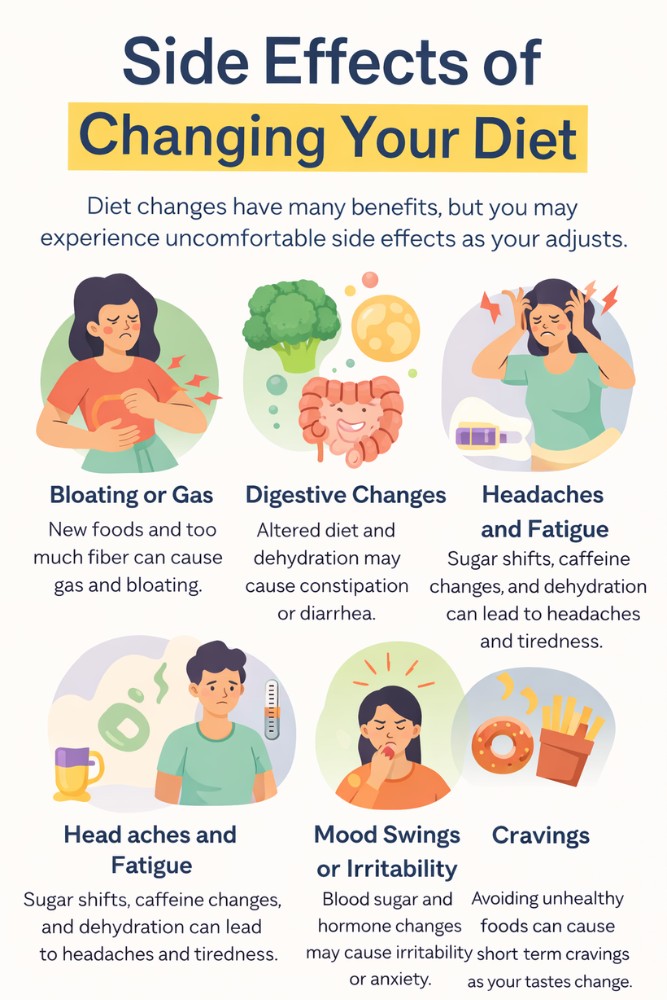
Side Effects of Changing Your Diet
Switching to a healthy diet increases your energy, helps with weight management, and improves your overall health. Unfortunately, there are also downsides, including increased food costs and more work preparing nutritious options. Many people also experience physical side effects. The following sections cover the five most common issues.
Bloating or gas
A common side effect of changing your diet is increased bloating or gas. According to experts, one possible culprit is eating cruciferous vegetables, such as broccoli or Brussels sprouts. These contain natural sugars that the body has difficulty digesting. Though fiber is vital for gut health, too much of it may also increase these symptoms.
Probiotics, found in yogurt, cottage cheese, and sauerkraut, help maintain your gut’s microbiome. However, overconsumption produces gas that increases bloating and discomfort.
Digestive changes
Digestive issues are another possible side effect of changing your diet. For instance, constipation frequently occurs when protein intake increases and fiber consumption decreases. Dehydration also prevents the bowels from moving properly, so staying hydrated is vital.
You may also have the opposite reaction, suffering from diarrhea when altering your diet. Sugar often loosens your bowels, even when they’re from healthy options, such as fruit. Difficulty digesting dairy and gluten is also a common issue, causing diarrhea.
Headaches and fatigue
When you change your diet, side effects may include headaches and fatigue. Experts discuss several possible reasons for these physical symptoms, including reduced sugar in your diet. The body converts glucose into energy to perform many functions. When your sugar intake decreases, head pain and low energy often occur.
Intermittent fasting, altered caffeine intake, long periods between meals, and dehydration also contribute to these symptoms. The side effects often persist until your body adapts to your new routine.
Mood swings or irritability
Recent studies show that mood swings often result from dietary modifications, including altered carbohydrate consumption. Refined carbs alter the body’s blood sugar and insulin levels.
When these levels fluctuate due to dietary changes, you may experience side effects like anxiety or irritability. In fact, experts state that low blood sugar is associated with mood disorders, including depression and chronic stress.
Cravings
Your body becomes used to eating the same foods when they’re a regular part of your meal and snack routines. A side effect of changing your diet may include cravings when those foods are no longer consumed.
Luckily, those cravings likely won’t last long, especially if you can avoid those unhealthy items. According to recent studies, cravings for high-fat, sweet, or starchy items decrease over time. So, the longer you go without eating these, the less you’ll want them.
Resources:
- NIIDDK, Changing Your Habits for Better Health
https://www.niddk.nih.gov/health-information/diet-nutrition/changing-habits-better-health - UCLA, April 29, 2024, 6 Things You Can Do To Prevent Bloating
https://www.uclahealth.org/news/article/6-things-you-can-do-prevent-bloating - Cleveland Clinic, Probiotics
https://my.clevelandclinic.org/health/treatments/14598-probiotics - Brigham and Women’s Hospital, preventing and Managing Constipation
https://www.brighamandwomens.org/assets/BWH/cwmw/pdfs/preventing-and-managing-constipation.pdf - Harvard Health Publishing, Aug. 8, 2023, Is Something in Your Diet Causing Diarrhea?
https://www.health.harvard.edu/diseases-and-conditions/is-something-in-your-diet-causing-diarrhea - Cleveland Clinic, Hunger Headache
https://my.clevelandclinic.org/health/diseases/22573-hunger-headache - PMC, June 29, 2020, Food and mood: how do diet and nutrition affect mental wellbeing?
https://pmc.ncbi.nlm.nih.gov/articles/PMC7322666/ - PMC, Oct. 1, 2011, Change in food cravings, food preferences, and appetite during a low-carbohydrate and low-fat diet
https://pmc.ncbi.nlm.nih.gov/articles/PMC3139783/
This article is for educational and informational purpose only and does not substitute for professional medical advice. For any questions about your own health condition, speak to a qualified physician or healthcare provider.











Leave A Comment